I still remember the first time I spotted a small animal running through a garden. At first glance, I thought it was a mole. A few minutes later, someone told me it was actually a vole. That left me confused. They looked similar, they were both small, and they both seemed to spend time around the ground.
So which one was it?
If you’ve ever searched for “mole or vole,” you’re not alone. Many people mix up these animals because they are small mammals that often live in yards, fields, and gardens. They can both cause damage to plants and lawns, making homeowners curious about which creature they’re dealing with.
The confusion gets even worse because moles and voles leave signs of activity underground. However, despite their similarities, they are very different animals with different behaviors, diets, and appearances.
Understanding the difference matters because identifying the correct animal can help you protect your lawn, garden, or landscape more effectively.
In this guide, you’ll learn what moles and voles are, why people confuse them, how to tell them apart, and which signs to look for if they visit your property.
✅ Mole or Vole – Quick Answer
A mole is a burrowing mammal that mainly eats insects and earthworms underground.
A vole is a small rodent that eats plants, roots, seeds, and grasses.
Examples:
- Raised tunnels in a lawn often indicate a mole.
- Chewed plants may suggest a vole.
- Moles dig deep underground, while voles usually stay closer to the surface.
📖 What Does Mole or Vole Mean?
Both moles and voles are small mammals, but they belong to different animal groups.
What Is a Mole?
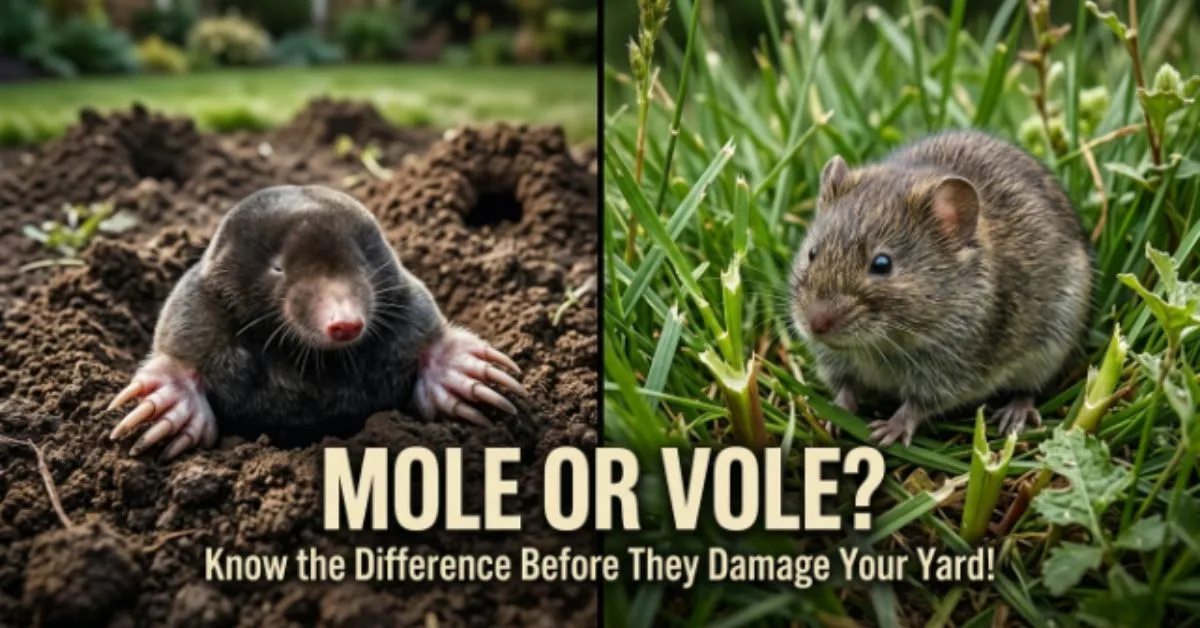
A mole is a burrowing mammal built for digging.
Characteristics include:
- Large front paws
- Small eyes
- Velvety fur
- Underground lifestyle
Moles spend most of their lives below ground.
They mainly eat:
- Earthworms
- Insects
- Grubs
What Is a Vole?
A vole is a small rodent.
Characteristics include:
- Small rounded ears
- Short legs
- Compact body
- Visible eyes
Voles often resemble mice but have shorter tails.
They eat:
- Grass
- Roots
- Seeds
- Bark
🧠 Why Do People Confuse Mole or Vole?
1. Both Are Small Mammals
Most people only see them briefly.
2. Both Live Near The Ground
Their habitats often overlap.
3. Both Can Damage Lawns
Homeowners frequently notice the damage before seeing the animal.
4. Similar Size
Many species are roughly similar in size.
5. Rare Sightings
Since they spend much of their time hidden, identification can be difficult.
⚖️ Mole vs Vole
| Feature | Mole | Vole |
| Animal Type | Mammal | Rodent |
| Diet | Insects and worms | Plants and seeds |
| Habitat | Underground tunnels | Surface runways and burrows |
| Eyes | Very small | More visible |
| Front Paws | Large digging claws | Small feet |
| Tail | Short | Slightly longer |
| Lawn Damage | Raised tunnels | Chewed vegetation |
Main Difference
Moles primarily eat insects and worms.
Voles mainly eat plants and vegetation.
American vs British Usage
The terms mole and vole are used in both American and British English.
| Region | Mole | Vole |
| USA | Common | Common |
| UK | Common | Common |
| Canada | Common | Common |
| Australia | Less common | Less common |
There are no major spelling differences between regions.
💬 Real-Life Examples of Mole or Vole
Gardening
“I found raised tunnels that suggest a mole.”
Lawn Care
“The damaged roots indicate vole activity.”
Wildlife Observation
“A vole ran across the grass near the fence.”
Farming
“Moles can disturb fields with their tunnels.”
Home Landscaping
“Voles damaged several young plants.”
⚠️ Common Mistakes to Avoid
1. Assuming They Are The Same Animal
❌ Moles and voles are identical.
✅ They belong to different groups.
2. Judging By Size Alone
❌ Small animal equals mole.
✅ Examine physical features and behavior.
3. Ignoring Feeding Damage
❌ All lawn damage comes from moles.
✅ Voles often damage plants directly.
4. Confusing Voles With Mice
❌ Every small rodent is a mouse.
✅ Voles have distinct characteristics.
5. Looking Only For The Animal
❌ Wait until you see it.
✅ Examine tracks, tunnels, and plant damage.
🎯 Pro Tips to Remember Mole or Vole
Tip 1
Think Mole = Miner because it digs underground.
Tip 2
Think Vole = Vegetation because it eats plants.
Tip 3
Large digging paws usually mean mole.
Tip 4
Rodent-like appearance usually means vole.
Tip 5
Raised tunnels often indicate mole activity.
📊 Usage Trends & Popularity
Both animals are frequently discussed in gardening and landscaping communities.
Mole Discussions
Common topics include:
- Lawn tunnels
- Soil disruption
- Insect control
Vole Discussions
Common topics include:
- Plant damage
- Root destruction
- Garden protection
Which Is More Common?
Moles often receive more attention because their tunnels are highly visible.
However, voles can cause significant plant damage that homeowners notice quickly.
❓ FAQs
1. Is a mole the same as a vole?
No. They are different animals with different diets and behaviors.
2. Which animal damages plants?
Voles commonly damage plants, roots, and bark.
3. Which animal eats worms?
Moles primarily eat worms and insects.
4. Are voles dangerous?
They are generally not dangerous to humans.
5. Are moles rodents?
No. Moles are not rodents.
6. How can I identify a mole?
Look for large digging claws and raised tunnels.
7. How can I identify a vole?
Look for a mouse-like body with a short tail.
8. Do moles help the soil?
Their tunneling can improve soil aeration.
9. Which animal causes surface runways?
Voles commonly create surface pathways through grass.
Conclusion
The debate over mole or vole becomes simple once you understand their key differences.
Moles are burrowing mammals designed for life underground. They feed mainly on insects, worms, and grubs. Their large digging claws and raised tunnels make them relatively easy to identify.
Voles, on the other hand, are small rodents that feed primarily on plants, roots, seeds, and bark. They often cause visible damage to gardens, lawns, and landscaping.
Because both animals are small and live close to the ground, many people confuse them. However, observing their appearance, diet, and the type of damage they leave behind can quickly reveal which animal is present.
If you notice raised tunnels, you’re likely dealing with a mole. If plants are being chewed or roots are disappearing, a vole is often the culprit.
Remember this simple rule: moles dig for insects, while voles eat vegetation. Once you know that distinction, identifying these common backyard visitors becomes much easier.

“I’m Agatha Christie, the grammar expert behind Grammeriffy.com. I help readers master English with clear, reliable writing tips.”