I remember writing a blog post late at night. I was tired, rushing, and trying to finish quickly. <e typed the heading and proudly read it: “How to Write a Catchy Tittle.” Me paused. Something felt off. Was it tittle or title? I had seen both spellings online, especially in comments and forums, so I wasn’t sure anymore.
If you’ve ever had this moment, you’re not alone. Many people search for “tittle or title” because the words look similar and sound close. English spelling can be tricky, and one extra letter can change everything. This confusion often happens when typing fast or relying on how a word sounds instead of how it is spelled.
The problem is simple but important. Using the wrong word, like tittle, can make your writing look unprofessional especially in emails, blogs, or business content. But the good news is that the answer is very easy once you understand it.
In this guide, I’ll show you the correct spelling, explain why the confusion happens, and help you use the right word every time.
✅ Tittle or Title – Quick Answer
The correct spelling is title ✅
Tittle is incorrect in this context ❌
✔️ Examples:
- The book has a great title.
- Please add a title to your document.
- His job title is manager.
👉 Quick tip:
Use title when you mean a name, heading, or label.
📖 The Origin of Tittle or Title
The word title comes from Latin. It comes from titulus, which means “name” or “label.” Over time, it became the English word we use today.
👉 What about “tittle”?
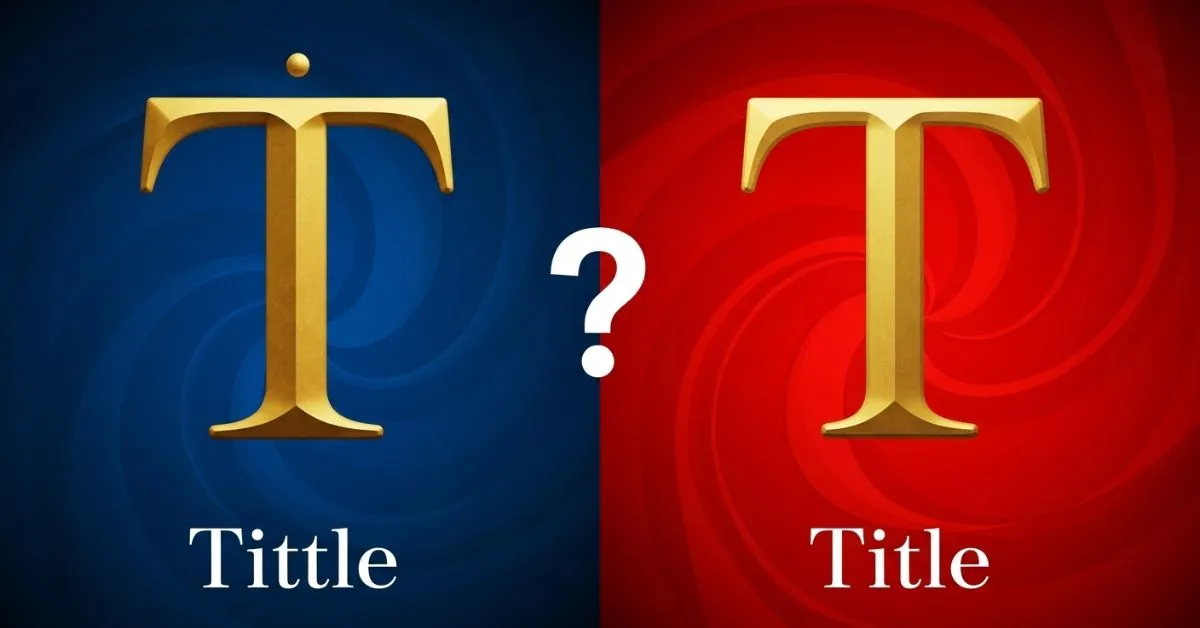
“Tittle” is actually a real word but it has a very different meaning. It means a small mark, like the dot over the letter “i” or “j.”
✔️ Example:
- The dot over “i” is called a tittle.
👉 Why confusion happens:
- Both words look very similar
- They sound almost the same
- People often type fast and add an extra “t”
But in most cases, when writing headings or names, you should always use title.
British vs American Usage
There is no difference between British and American English for tittle or title.
| Usage Type | Correct Form |
| American English | title ✅ |
| British English | title ✅ |
| Incorrect Use | tittle ❌ |
✔️ Examples:
- 🇺🇸 US: The title of the book is catchy.
- 🇬🇧 UK: She changed the title of the article.
👉 Both use title only.
🎯 Which One Should You Use?
You should almost always use title.
Here’s a simple guide:
- 🇺🇸 US audience → title
- 🇬🇧 UK audience → title
- 🌍 Global audience → title
❌ Avoid using tittle unless you are talking about the dot over letters.
👉 Easy rule:
If you mean a name, heading, or label → use title
⚠️ Common Mistakes with Tittle or Title
Here are common errors people make:
❌ Wrong:
- Blog tittle
- Video tittle
- Job tittle
✅ Correct:
- Blog title
- Video title
- Job title
👉 Another mistake:
People think “tittle” is just a spelling variation but it’s not.
❌ “Write a good tittle for your article.”
✅ “Write a good title for your article.”
👉 Tip:
Always double-check when typing fast.
💬 Tittle or Title in Real-Life Examples
Here’s how title is used in everyday life:
📧 Email:
Please update the title of the report.
📱 Social Media:
This video has a catchy title!
📰 Professional Writing:
The title of the research paper is clear and simple.
🗣️ Casual Conversation:
“What’s the title of that movie?”
👉 You’ll notice:
In all real life use, title is the correct word.
📊 Usage Trends & Popularity
When people search “tittle or title,” they are usually trying to fix a spelling mistake.
📈 Trends show:
- Title → extremely high usage worldwide
- Tittle → very low usage (rare and specific meaning)
🌎 Common in:
- United States
- United Kingdom
- Canada
- Australia
👉 Why is “title” more popular?
Because it is used in:
- Books
- Articles
- Videos
- Jobs
👉 Insight:
Search engines and grammar tools always prefer title and often correct tittle automatically.
📋 Comparison Table (Keyword Variations)
| Word | Correct? | Meaning |
| title | ✅ Correct | Name or heading |
| tittle | ⚠️ Rare | Small mark (dot over i/j) |
| tital | ❌ Incorrect | Spelling mistake |
| titel | ❌ Incorrect | Misspelling |
FAQs ❓
1. Is tittle ever correct?
Yes, but rarely. It means a small mark, like the dot over “i.” It is not used for headings.
2. What is the correct spelling for headings?
The correct word is title.
3. Why do people write tittle instead of title?
Because the words sound similar and typing mistakes are common.
4. Is there a US vs UK difference?
No. Both use title only.
5. What does title mean?
It means a name, heading, or label for something like a book, job, or article.
6. Can I use tittle in writing?
Only in very specific cases about letters. Not for general writing.
7. Is “job tittle” correct?
No. The correct phrase is job title.
8. How can I remember the correct spelling?
Think: “title = name.” Keep it simple.
🧾 Conclusion
The confusion between tittle or title is very common, but the solution is simple. The correct word for almost every situation is title. It means a name, heading, or label, and it is used in everyday writing.
The word tittle does exist, but it has a very different meaning. It refers to a small mark, like the dot over the letter “i.” This is why using it in place of “title” is incorrect and can confuse readers.
There is no difference between British and American English, which makes things easier. No matter where your audience is, title is always the right choice for headings, job roles, and names.
Using the wrong spelling, like “tittle,” can make your writing look less professional. This matters a lot in emails, blogs, business content, and academic work. But the good news is that this mistake is easy to fix.
Just remember one simple rule:
If you mean a name or heading, use title.
Once you keep this in mind, you’ll never make this mistake again. Keep it simple, clear, and correct title is the word you need.
Discover More Articles:
- Rackets or Racquets : US vs UK Spelling Made Simple🎾(2026)
- Dialogue or Dialog : Correct Usage + Real Examples✅(2026)
- Enquired or Inquired : Explained (US vs UK Guide)📩(2026)

“I’m David Crystal, a grammar expert at Grammeriffy.com. I help readers master English with clear, practical writing tips.”