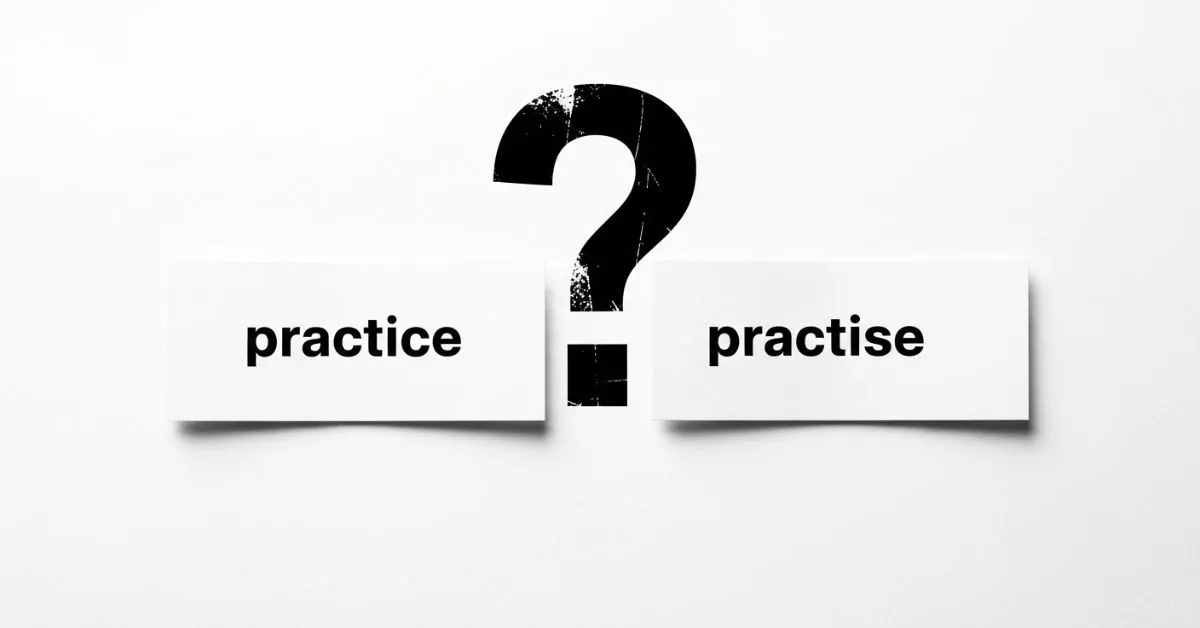
I remember writing an email once: “I need more practise before the test.” I paused and looked at it again. Something felt off. Was it practice or practise? I had seen both spellings before, and that made it confusing.
If you’ve searched “practice or practise,” you’re not alone. Many people get confused because both words are correct but used in different ways. The difference depends on if you are using British English or American English, and also if the word is a noun or a verb.
This is one of those tricky English rules where spelling changes based on grammar. That’s why even fluent speakers sometimes make mistakes.
In this guide, I’ll explain the difference in a simple way, show clear examples, and help you choose the right word every time.
✅ Practice or Practise – Quick Answer
✔️ Practice
- Noun in both US and UK
- Verb in American English
✔️ Practise
- Verb in British English
Examples:
- I need more practice. (noun)
- I practice every day. (US verb)
- I practise every day. (UK verb)
👉 Simple rule:
- Practice = thing (noun)
- Practise = action (verb, UK only)
📚 The Origin of Practice or Practise
Both words come from Greek praktikos, meaning “fit for action,” and later from Latin practica.
Over time, English split the word into two forms:
- Practice → noun
- Practise → verb (in British English)
👉 American English simplified this:
- Uses practice for both noun and verb
British English vs American English Spelling
This is where the main difference exists.
| Usage | American English | British English |
| Noun | practice | practice |
| Verb | practice | practise |
Examples:
- 🇺🇸 US: I practice daily.
- 🇬🇧 UK: I practise daily.
- Both: This takes a lot of practice.
🎯 Which Spelling Should You Use?
It depends on your audience:
- 🇺🇸 US audience → practice (for both noun and verb)
- 🇬🇧 UK audience →
- practice (noun)
- practise (verb)
- 🌍 Global audience → practice (safe choice)
👉 Tip:
If unsure, use practice it works everywhere.
⚠️ Common Mistakes with Practice or Practise
Here are frequent errors:
| Mistake | Correction |
| I practise a lot (US context) | I practice a lot ✅ |
| This needs practise (noun) | This needs practice ✅ |
| I will practice (UK verb confusion) | I will practise ✅ |
👉 Key idea:
- Use practice for things
- Use practise for actions (UK only)
✍️ Practice or Practise in Everyday Examples
📧 Email:
- Please review and practice the steps.
📰 News:
- The team will practise before the match. (UK)
📱 Social Media:
- Daily practice makes you better!
📄 Formal Writing:
- The study focuses on clinical practice.
📊 Practice or Practise – Google Trends & Usage Data
- Practice → Very high global usage
- Practise → Common in UK, less worldwide
🌎 Trends:
- United States → mostly practice
- United Kingdom → both forms used correctly
- Global → practice dominates
👉 Insight:
Search engines show practice more often due to US influence.
📋 Comparison Table (Keyword Variations)
| Word | Correct? | Usage |
| practice | ✅ Correct | Noun (US & UK), verb (US) |
| practise | ✅ Correct | Verb (UK only) |
| practis | ❌ Incorrect | Spelling mistake |
FAQs❓
1. Is practise correct?
Yes, but only as a verb in British English.
2. Is practice correct?
Yes, it is correct in both US and UK (noun), and also as a verb in US English.
3. What is the difference between practice and practise?
Practice is a noun; practise is a verb (in UK English).
4. Which should I use in the US?
Use practice for both noun and verb.
5. Which should I use in the UK?
Use practice (noun) and practise (verb).
6. Is practise used in American English?
No, it is not commonly used in the US.
7. How can I remember the rule?
Think: practiCe = noun (like adviCe), practiSe = verb (like adviSe).
Conclusion
The confusion between practice and practise comes from how English works in different regions. The key point is simple: both spellings are correct, but they are used differently.
In American English, things are easy. You can use practice for both noun and verb. But in British English, there is a clear difference. Practice is a noun, and practise is a verb.
This small difference can make a big impact on your writing. Using the wrong form may confuse readers or make your content look less professional. The good news is that once you understand the rule, it becomes easy to remember.
If you write for a global audience, using practice is usually the safest choice. But if you are writing for a UK audience, follow the noun/verb rule carefully.
Keep it simple, and you’ll get it right every time.
Discover More Articles:
- Phase or Faze : Clear Meaning, Examples & Easy Rule🔄(2026)
- Flare or Flair : Meaning, Examples & Easy Rule✨(2026)
- Were or We’re : Clear Examples That Make It Simple📚(2026)

“I’m Erin McKean, a grammar expert at Grammeriffy.com. I share practical tips to help readers write English clearly and confidently.”