I remember the first time I wrote a short story about my childhood and wanted to describe my mother. Me typed mama at first, then paused because I had also seen mamma in old books and articles. I wondered if I was making a spelling mistake. Curious, I started checking online and quickly realized this is a common question. People often search for mama or mamma when writing stories, social media posts, emails, or even academic papers because they aren’t sure which spelling is correct.
After some research, I learned that the difference isn’t about being right or wrong it’s mainly regional and stylistic. American English favors one spelling, while British English and other contexts may prefer the other. Once I understood the origin and usage of these words, it became much easier to choose the right spelling for any type of writing.
In this guide, I’ll explain the differences, common mistakes, examples, and which version you should use based on your audience. By the end, you’ll confidently know when to use mama or mamma.
Mama or Mamma – Quick Answer
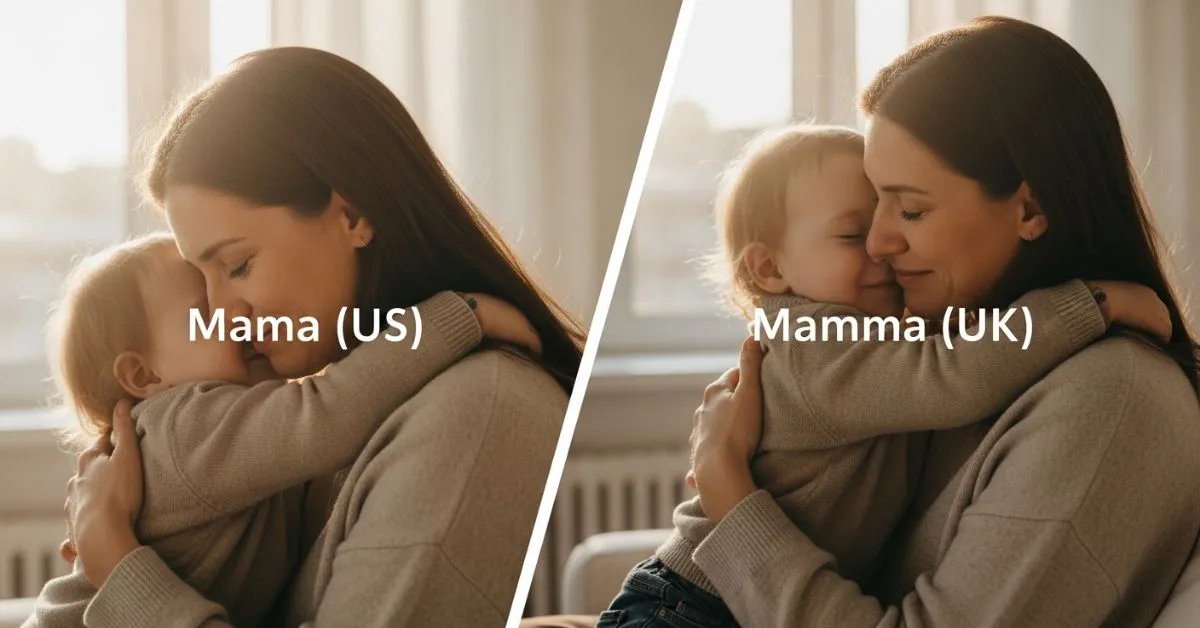
Both mama and mamma refer to a mother, usually in informal or affectionate contexts.
- Mama → More common in American English
- Mamma → Often found in British English, literary, or formal contexts
Examples:
- US: “I love my mama’s cooking.”
- UK: “She ran to hug her mamma.”
Both spellings are correct; the choice depends on audience and style.
The Origin of Mama or Mamma
The word comes from the child’s first sounds, like “ma” or “mama,” used worldwide to refer to mothers. Variations like mamma were influenced by Latin and Old English.
- Mama: Adopted in modern English, widely used in informal writing and American texts.
- Mamma: More traditional and often appears in literature, historical texts, or British English writing.
The difference is purely spelling preference; the meaning remains the same.
British English vs American English Spelling
| Region | Spelling | Example Sentence |
| American English | mama | “Her mama was waiting at the door.” |
| British English | mamma | “His mamma taught him to read.” |
Key Rule: American English favors simpler spellings, while British English preserves traditional forms influenced by literature and Latin.
Other similar examples of simplified American vs British forms:
| American | British |
| color | colour |
| favorite | favourite |
| mama | mamma |
Which Spelling Should You Use?
- United States: Use mama
- UK, Australia, Canada: Use mamma for literary or formal writing; mama is also accepted informally
- Global or online content: Either spelling works, but consistency is key
For blogs, social media, or emails, pick the version that fits your audience.
Common Mistakes with Mama or Mamma
- Mixing spellings in one document
❌ “Her mama ran to her mamma.”
✅ “Her mama ran to her.” - Incorrect spellings
❌ mamma, maama
✅ mama / mamma - Overusing in formal writing
“Mama” or “mamma” works best in informal, literary, or storytelling contexts. Avoid in strict academic writing unless quoting.
Mama or Mamma in Everyday Examples
Emails:
- US: “Dear mama, thank you for your help today.”
- UK: “Her mamma reminded her to study for school.”
Social Media:
- #MamaLove (US)
- #MammaMoments (UK)
News / Articles:
- “The child ran to her mama after school.”
- “He fondly remembered his mamma’s words.”
Formal Writing:
- Only use when quoting or in literary contexts: “She whispered to her mamma before leaving.”
Mama or Mamma – Google Trends & Usage Data
- United States: “mama” is searched far more frequently
- United Kingdom & Australia: “mamma” is more common in older texts and literature
- Global: American spelling tends to dominate online content
| Keyword Variation | Popularity | Region Preference |
| mama | High | US, Philippines, Global informal content |
| mamma | Medium | UK, Australia, literary texts |
SEO Tip: Use the spelling that matches your audience for better search visibility.
Comparison Table
| Word | Region | Example |
| mama | American English | “Her mama baked cookies for her birthday.” |
| mamma | British English / Literary | “His mamma taught him manners.” |
FAQs
1. Is “mamma” wrong in American English?
No, but mama is far more common.
2. Can I use “mama” in UK writing?
Yes, especially for informal content, but “mamma” is more literary.
3. Do the words have different meanings?
No, both mean mother, usually in affectionate contexts.
4. Which spelling is better for social media?
Use the version that matches your audience (#MamaLove US, #MammaMoments UK).
5. Should I be consistent in one document?
Yes. Mixing the two can confuse readers.
6. Is it pronounced differently?
No, both are pronounced /ˈmɑːmə/.
7. Can I use them in professional writing?
Only when quoting or in storytelling; avoid in formal academic or technical writing.
Conclusion
Choosing between mama and mamma is simple once you understand the regional and stylistic differences. Both spellings are correct, but mama dominates in American English and informal writing, while mamma appears more in British English, literature, and historical texts.
When writing emails, social media posts, blogs, or stories, think about your audience. For US readers, mama feels natural; for UK, Australian, or literary contexts, mamma may be preferable. Most importantly, remain consistent throughout your content. Understanding these small differences ensures your writing looks polished, professional, and readable, whether you are sharing personal stories, literary work, or informal messages.

“I’m George Orwell, a grammar expert at Grammeriffy.com. I help readers improve their English with clear and reliable writing guidance.”