I remember the first time I was writing about healthy food and typed “high in fibre.” Then I paused. I had also seen “fiber” on nutrition labels, especially from US brands. That moment made me wonder are both correct, or is one a mistake?
Many people search for fiber or fibre because the words look almost identical but are spelled differently. Unlike some confusing word pairs, this is not about meaning it’s about regional spelling. The tricky part is knowing which version to use based on your audience.
If you’ve ever hesitated while writing this word, you’re not alone. I’ve been there too. The good news is that the rule is simple once you understand it. In this guide, I’ll explain the difference, show you examples, and help you choose the right spelling every time with confidence.
Fiber or Fibre – Quick Answer
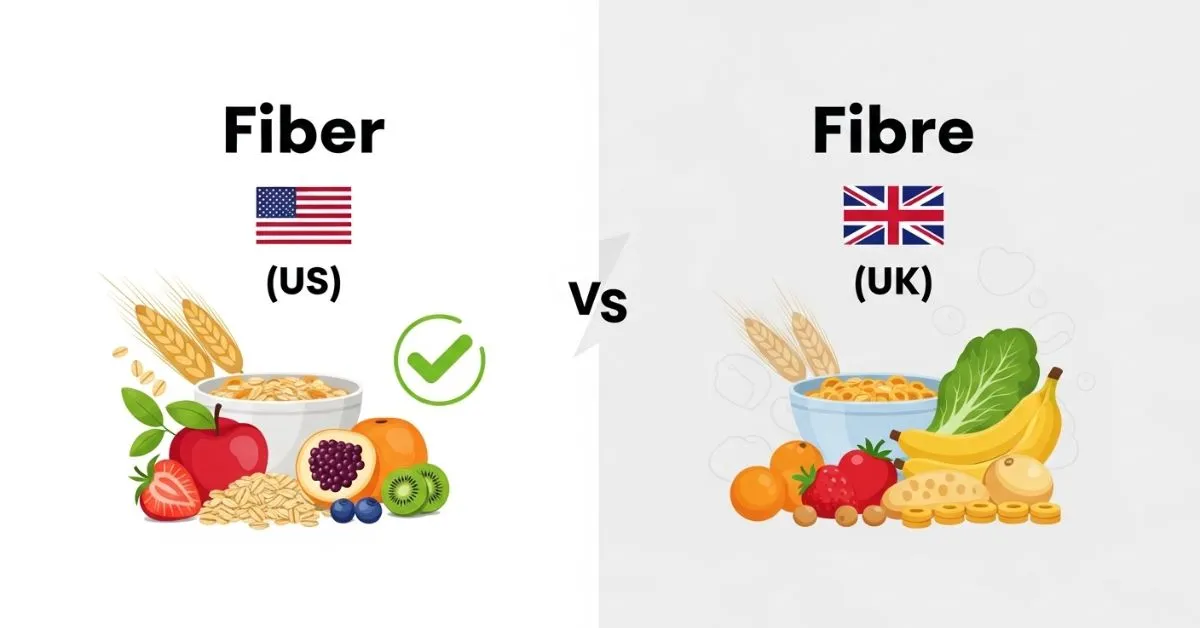
Fiber → ✅ American English
Fibre → ✅ British English
Examples:
- ✅ “This cereal is high in fiber.” (US)
- ✅ “This cereal is high in fibre.” (UK)
- ❌ “This cereal is high in fibre.” (for US audience)
Tip:
Fiber = US
Fibre = UK
The Origin of Fiber or Fibre
Both fiber and fibre come from the Latin word fibra, meaning “thread” or “strand.”
Over time:
- British English kept the spelling fibre
- American English simplified it to fiber
This change is part of a larger pattern where American English drops or changes certain letters to simplify spelling.
Important: The meaning stayed the same. Only the spelling changed.
British English vs American English Spelling
This is a classic US vs UK spelling difference.
| Region | Correct Spelling | Example Sentence |
| American English | fiber | “Fiber is good for digestion.” |
| British English | fibre | “Fibre helps maintain health.” |
Key Rule: Same meaning, different spelling based on region.
Which Spelling Should You Use?
Choose based on your audience:
- US audience → use “fiber”
- UK / Commonwealth → use “fibre”
- Global writing → choose one style and stay consistent
Pro Tip:
If your website targets US traffic, always use fiber for better SEO and readability.
Common Mistakes with Fiber or Fibre
- Mixing both spellings
- ❌ “Fiber is important for fibre intake.”
- ✅ Stick to one version
- ❌ “Fiber is important for fibre intake.”
- Using UK spelling for US audience
- ❌ “Fibre supplement” (US blog)
- ✅ “Fiber supplement”
- ❌ “Fibre supplement” (US blog)
- Thinking meanings are different
- ❌ They are not different words
- ✅ Only spelling differs
- ❌ They are not different words
- Ignoring consistency
- Always follow one style guide
- Always follow one style guide
Fiber or Fibre in Everyday Examples
Emails:
- “This product contains high fiber.” (US)
- “This product contains high fibre.” (UK)
Health Blogs:
- “Fiber supports digestion.”
- “Fibre improves gut health.”
Social Media:
- “Add more fiber to your diet!”
- “Fibre is key to healthy living!”
News:
- “Experts recommend more fiber intake.”
Formal Writing:
- “Dietary fiber plays a key role in health.”
📊 Fiber or Fibre – Google Trends & Usage Data
Search trends show a clear regional pattern:
- Fiber → Very high usage in the United States
- Fibre → High usage in the UK, Canada, Australia
| Keyword | Popularity | Usage |
| fiber | Very High | US content, health, nutrition |
| fibre | High | UK & Commonwealth |
SEO Tip:
Use fiber for US traffic and fibre for UK-based audiences.
Comparison Table
| Word | Status | Region | Meaning |
| fiber | ✅ Correct | American English | Dietary or material strands |
| fibre | ✅ Correct | British English | Same meaning |
FAQs❓
1. Is “fiber” or “fibre” correct?
Both are correct. It depends on the region.
2. What is the difference between fiber and fibre?
Only spelling. The meaning is the same.
3. Which spelling is used in the US?
“Fiber” is used in American English.
4. Which spelling is used in the UK?
“Fibre” is used in British English.
5. Can I use both in one article?
No, it’s better to stay consistent.
6. Which spelling is better for SEO?
Use “fiber” for US audiences and “fibre” for UK audiences.
7. Does the meaning change with spelling?
No, both mean the same thing.
Conclusion
Understanding the difference between fiber or fibre is simple once you know the rule. Both words mean the same thing, but the spelling changes based on location. American English uses fiber, while British English uses fibre.
The confusion happens because both versions are correct, and people often see them used online without realizing the regional difference. This can make it hard to know which one to choose, especially when writing for a global audience.
The best approach is to think about who you are writing for. If your audience is in the United States, use fiber. If your audience is in the UK or other Commonwealth countries, use fibre. For global content, pick one style and stay consistent throughout your writing.
By following this simple rule, you can avoid confusion, improve clarity, and make your content look more professional. Once you get used to it, choosing between fiber and fibre will feel natural every time you write.

“I’m Bill Bryson, a grammar expert at Grammeriffy.com. I share clear tips and guidance to help readers master English confidently.”