I remember writing a sentence once: “There are less people at the party today.” I paused. Something didn’t feel right. Should it be less or fewer? I had heard both used in everyday speech, and suddenly I wasn’t sure which one was correct.
If you’ve ever had this confusion, you’re not alone. This is one of the most common grammar mistakes in English. Even native speakers mix up fewer and less, especially in casual writing and speech.
So I decided to figure it out clearly. I checked grammar rules, examples, and real usage. The good news? The rule is simple and once you understand it, you’ll never second-guess again.
In this guide, I’ll break it down in the easiest way possible so you can confidently use fewer and less every time.
✅ Fewer or Less – Quick Answer
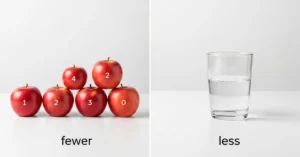
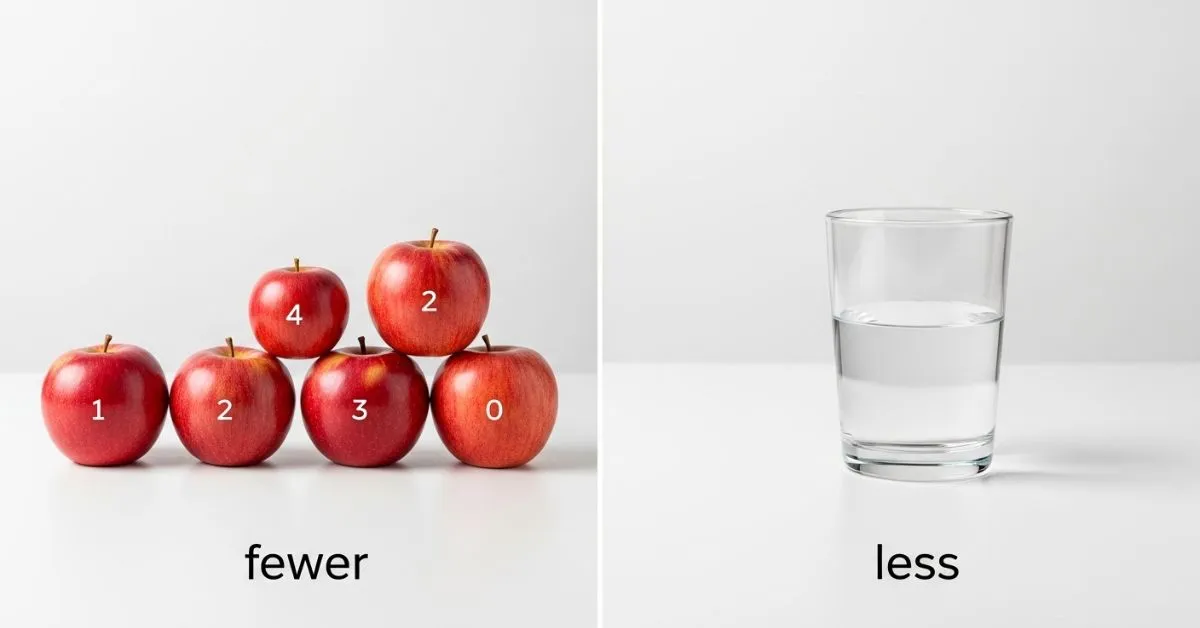
👉 Use fewer for things you can count
👉 Use less for things you cannot count
Examples:
- Fewer people attended the event. ✅
- Less water is in the bottle. ✅
❌ Wrong:
- Less people attended the event.
👉 Simple rule:
Countable = fewer
Uncountable = less
📜 The Origin of Fewer or Less
Both words come from Old English:
- Less comes from lǣssa, meaning “smaller amount”
- Fewer comes from fēawe, meaning “not many”
👉 Over time, English separated their uses:
- Fewer → number (countable items)
- Less → amount (uncountable things)
This rule has been followed for hundreds of years in formal writing.
🌍 British English vs American English Spelling
Good news: there is no spelling difference, but usage can vary slightly in casual speech.
| Version | Usage | Notes |
| American English 🇺🇸 | fewer / less | Rule followed strictly |
| British English 🇬🇧 | fewer / less | Same rule, but “less” used casually |
| Meaning | Different | Based on count vs amount |
👉 Both forms are correct but used differently
🎯 Which Spelling Should You Use?
- 🇺🇸 US audience → follow the rule strictly
- 🇬🇧 UK audience → same rule (more flexible in speech)
- 🌍 Global writing → follow the rule for clarity
✔ Use fewer for countable nouns
✔ Use less for uncountable nouns
👉 Safe rule:
When in doubt, check if you can count it
❌ Common Mistakes with Fewer or Less
Here are frequent errors:
- ❌ Less people
✔ Fewer people - ❌ Less cars
✔ Fewer cars - ❌ Fewer water
✔ Less water
👉 Tip:
If you can count it (1, 2, 3) → use fewer
📝 Fewer or Less in Everyday Examples
📧 Emails
We need fewer emails in the inbox.
📰 News
There are fewer jobs available this year.
📱 Social Media
Trying to eat less sugar these days.
📚 Formal Writing
The study shows fewer errors in the new system.
📊 Fewer or Less – Google Trends & Usage Data
Search trends show:
- “Less” → Very high usage (general word)
- “Fewer” → Lower usage but important in grammar
📍 Popular regions searching this keyword:
- United States
- United Kingdom
- Canada
- Australia
- India & Pakistan
👉 Many searches happen because people are unsure about the rule
📋 Comparison Table – Fewer vs Less
| Feature | Fewer | Less |
| Use | Countable nouns | Uncountable nouns |
| Meaning | Smaller number | Smaller amount |
| Example | Fewer books | Less water |
| Grammar | More precise | General use |
| Common mistake | ❌ Fewer water | ❌ Less people |
FAQs❓
1. Is it fewer or less correct?
👉 Both are correct, but used differently.
2. When should I use fewer?
👉 Use fewer for things you can count.
3. When should I use less?
👉 Use less for things you cannot count.
4. Is “less people” wrong?
👉 Yes, in formal writing. Use “fewer people.”
5. Why do people mix them up?
👉 Because “less” is commonly used in speech.
6. Is the rule strict in English?
👉 Yes, especially in formal writing.
7. Can I use less in casual speech?
👉 Yes, but fewer is more correct.
Conclusion
The confusion between fewer and less is very common, but the rule is simple once you understand it. Use fewer when you can count something, and use less when you cannot.
This difference may seem small, but it makes your writing clearer and more professional. Many people use less for everything in casual speech, but in formal writing, the correct choice matters.
If you remember one simple rule, let it be this:
👉 Countable = fewer | Uncountable = less
With practice, this will become natural. You’ll stop second guessing and use the right word confidently in emails, essays, and everyday writing.
Discover More Articles:
- Bias or Biased : Easy Explanation with Real Examples✍️(2026)
- Lawyer or Attorney : Simple Guide for Everyday Use⚖️(2026)
- Dual or Duel : Quick Guide for Clear and Correct Writing📚(2026)

“I’m Noah Webster, a grammar expert at Grammeriffy.com. I provide clear tips to help readers master English writing confidently.”