I remember the first time I typed a sentence about my friend’s reaction to a joke. I wrote faze, but then I paused because I had also seen phase in other texts. Which one was correct? This is a question many people search for because phase or faze can be confusing in writing. Choosing the wrong word can make your text look careless or even change the meaning.
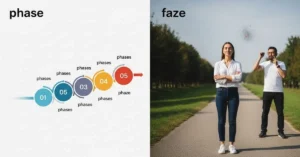
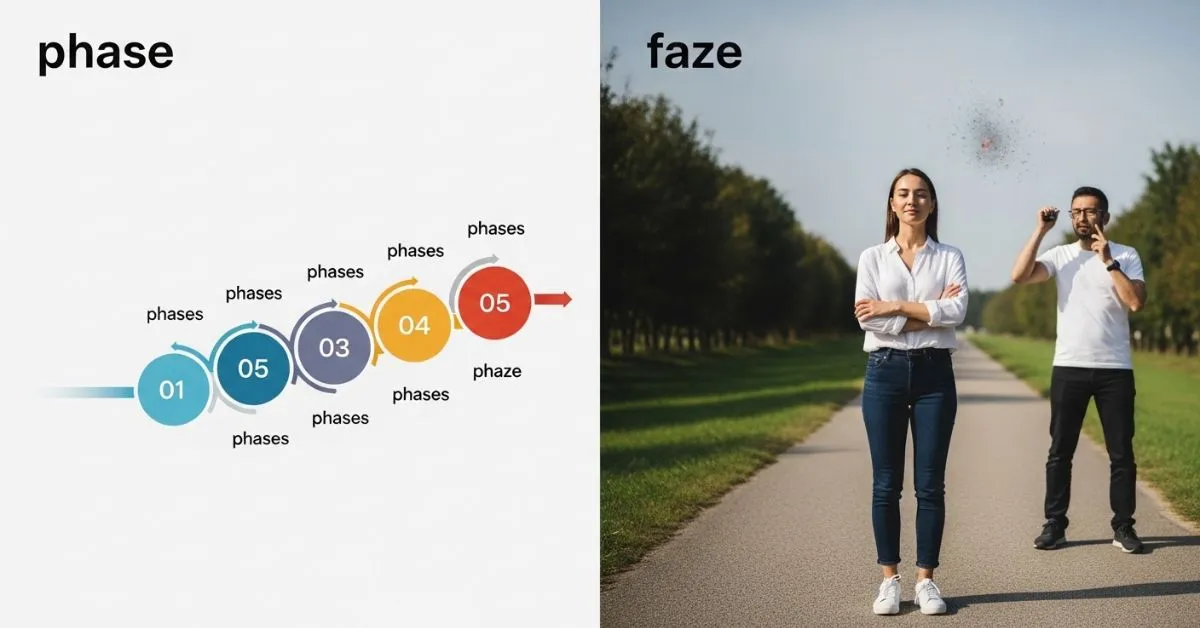
After some research, I discovered that the confusion isn’t about being right or wrong it’s about meaning and context. Phase and faze are not interchangeable. Phase usually refers to a stage, period, or step in a process, while faze means to disturb, confuse, or bother someone.
Knowing the difference ensures your writing is precise, professional, and easily understood. In this guide, I’ll explain the origin, common mistakes, examples, and audience based advice so you’ll never mix up phase or faze again.
Phase or Faze – Quick Answer
- Phase → Refers to a stage, step, or period in a process
- Example: “The project is in its final phase.”
- Example: “The project is in its final phase.”
- Faze → Means to disturb, confuse, or upset someone
- Example: “Her criticism didn’t faze him at all.”
- Example: “Her criticism didn’t faze him at all.”
Tip:
Never use them interchangeably; the meaning is very different.
The Origin of Phase or Faze
- Phase: Comes from the Greek word phasis, meaning “appearance” or “stage.” Used in English since the 16th century to describe periods or stages of development.
- Faze: Originated in the 16th century as well, meaning “to daunt or disconcert.” Its usage is informal and mainly applies to affecting someone emotionally or mentally.
British English vs American English Usage
| Region | Word | Example Sentence |
| US & UK | phase | “This is just a difficult phase in life.” |
| US & UK | faze | “The loud noise didn’t faze the audience.” |
Key Rule: Both words are correct, but phase is standard for stages, and faze is used only for affecting or disturbing someone.
Which Spelling Should You Use?
- When talking about a stage or period: Use phase
- When talking about disturbing or confusing someone: Use faze
- Global writing / SEO: Use the word that fits the meaning in your context
Common Mistakes with Phase or Faze
- Mixing meanings
❌ “This is just a difficult faze in life.”
✅ “This is just a difficult phase in life.” - Incorrect spelling
❌ phaze, faze (for stages)
✅ phase (stage), faze (disturb) - Overusing in informal writing
Keep faze mostly for conversational or casual contexts.
Phase or Faze in Everyday Examples
Emails:
- “We are entering the final phase of the project.”
- “Don’t let the feedback faze you.”
News Articles:
- “The campaign entered a new phase this week.”
- “The unexpected results didn’t faze the team.”
Social Media:
- #FinalPhase, #CantFazeMe
Formal Writing:
- Use phase for professional or academic contexts.
- Use faze sparingly, only when describing reactions or disturbances.
Phase or Faze – Google Trends & Usage Data
- Phase: Dominates in searches related to projects, processes, or stages
- Faze: Appears in informal writing, social media, and conversational contexts
| Keyword Variation | Popularity | Region Preference |
| phase | High | US, UK, Global |
| faze | Medium | US, informal online writing |
SEO Tip:
Choose the word that matches your context and audience for accurate search visibility.
Comparison Table
| Word | Meaning | Example |
| phase | Stage, period, step | “The project is in the next phase.” |
| faze | Disturb, confuse, upset | “The loud noise didn’t faze him.” |
FAQs❓
1. Can I use faze instead of phase?
No, the meanings are different; faze cannot replace phase.
2. Is phase correct in American English?
Yes, standard usage for stages, steps, or periods.
3. Is faze correct in British English?
Yes, but it’s informal and means to disturb or upset.
4. Can they be pronounced the same?
Yes, both are pronounced /feɪz/.
5. Which is more common in writing?
Phase is much more common in formal writing.
6. Can faze be used professionally?
Rarely; it’s better suited for informal or conversational contexts.
7. How do I remember the difference?
Think: phase = stage, faze = disturb.
Conclusion
Understanding phase or faze is crucial for precise writing. Phase refers to stages, steps, or periods and is standard in all types of writing. Faze means to disturb, confuse, or affect someone, and is mostly informal.
When writing emails, articles, blogs, or social media posts, choose the word based on its meaning, not how it sounds. Always remain consistent to avoid confusion. By knowing this small difference, you can write clearly, professionally, and accurately, ensuring readers understand exactly what you mean.
Discover More Articles:
- Flare or Flair : Meaning, Examples & Easy Rule✨(2026)
- Internal or External : Master the Correct Usage Today🔍(2026)
- Dying or Dyeing : Master the Difference in Minutes🎨(2026)

“I’m Erin McKean, a grammar expert at Grammeriffy.com. I share practical tips to help readers write English clearly and confidently.”