I remember the first time I wrote a sentence like, “He lays on the bed every afternoon.” I paused and read it again. Something felt off. I had also seen “lies on the bed,” and suddenly I wasn’t sure which one was right. That moment made me realize how confusing lies or lays can be.
Many people search for lies or lays because both words sound similar and come from related verbs. The problem is not spelling it’s grammar. These words come from two different verbs: lie (to rest) and lay (to put something down). The tricky part is that their forms overlap, which makes it easy to mix them up.
If you’ve ever stopped mid sentence wondering which one to use, you’re not alone. I’ve made the same mistake too. The good news is that once you understand the rule, it becomes simple. In this guide, I’ll explain the difference clearly, with examples and tips so you never get confused again.
Lies or Lays – Quick Answer
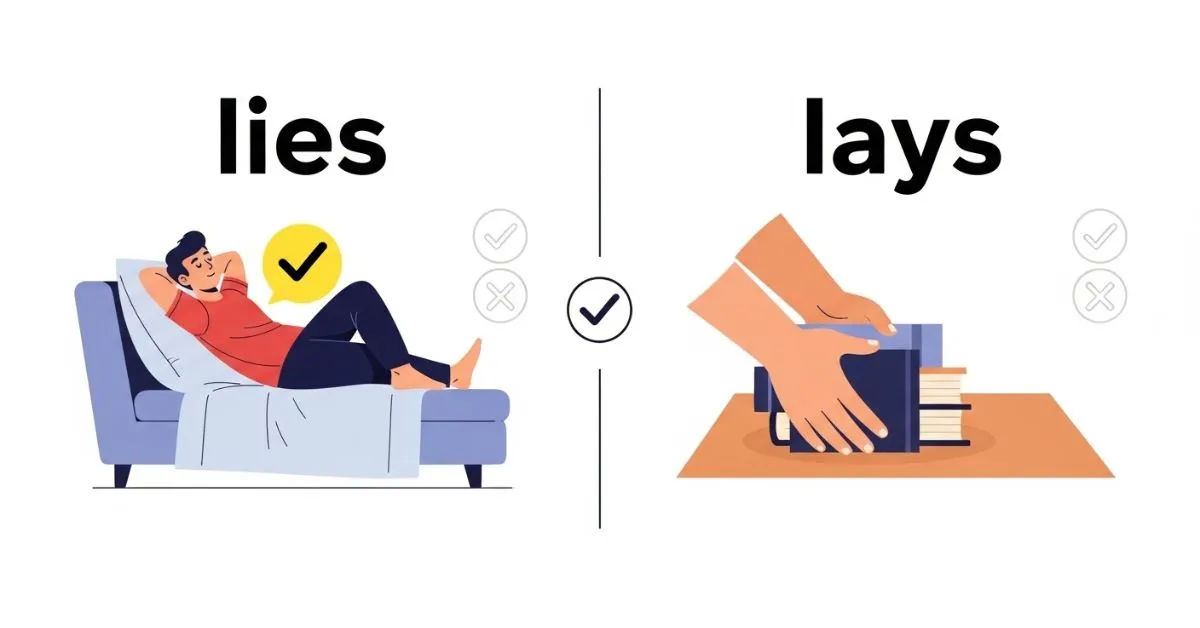
Lies → ✅ From lie (to rest, no object needed)
Lays → ✅ From lay (to put something down, needs an object)
Examples:
✅ “He lies on the couch.”
✅ “She lays the book on the table.”
❌ “He lays on the couch.”
❌ “She lies the book on the table.”
👉 Tip:
- Lie = rest (no object)
- Lay = put (needs object)
The Origin of Lies or Lays
The verb lie comes from Old English licgan, meaning “to rest or recline.”
The verb lay comes from Old English lecgan, meaning “to place something down.”
Over time, these verbs kept similar forms, which caused confusion:
- Lie → lies (present)
- Lay → lays (present)
Because they look and sound alike, many writers mix them up.
British English vs American English Spelling
This is not a US vs UK difference. Both follow the same grammar rules.
| Region | Correct Usage | Example |
| American English | lies / lays | “He lies down.” / “She lays the keys.” |
| British English | lies / lays | “The dog lies there.” / “He lays the book.” |
👉 Key Rule: The difference is about meaning, not location.
Which One Should You Use?
Choose based on the sentence meaning:
- Use lies → when someone rests or reclines
- Use lays → when placing something somewhere
Audience tip:
- US → same rule
- UK/Commonwealth → same rule
- Global writing → same rule
👉 Focus on whether there is an object.
Common Mistakes with Lies or Lays
1. Using “lays” without an object
❌ “He lays on the bed.”
✅ “He lies on the bed.”
2. Using “lies” with an object
❌ “She lies the book down.”
✅ “She lays the book down.”
3. Confusing past forms
❌ “Yesterday he layed down.”
✅ “Yesterday he lay down.”
4. Mixing meanings
Don’t rely on sound check the sentence structure.
Lies or Lays in Everyday Examples
Emails:
“He lies down after lunch.”
“She lays the files on the desk.”
Workplace:
“The report lies on the table.”
“He lays the tools carefully.”
Social Media:
“My cat lies in the sun all day 🐱”
News:
“The village lies near the river.”
Formal Writing:
“The responsibility lies with management.”
Lies or Lays – Google Trends & Usage Data
Both words are widely used but in different contexts:
| Keyword | Popularity | Usage |
| lies | High | Resting, position |
| lays | High | Placing objects |
👉 SEO Tip: Use the correct form to match meaning and improve clarity.
Comparison Table
| Word | Verb | Meaning | Needs Object? | Example |
| lies | lie | Rest/recline | ❌ No | “He lies down.” |
| lays | lay | Put/place | ✅ Yes | “She lays the book.” |
FAQs❓
1. What is the difference between lies and lays?
“Lies” means to rest. “Lays” means to put something down.
2. Can I say “he lays down”?
No. Say “he lies down.”
3. Does “lays” always need an object?
Yes. You must say what is being placed.
4. What is the past tense of lie?
The past tense is “lay.”
5. What is the past tense of lay?
The past tense is “laid.”
6. Do US and UK use them differently?
No, both follow the same rules.
7. Why is this confusing?
Because the verb forms overlap and sound similar.
Conclusion
Understanding the difference between lies or lays becomes simple once you focus on meaning. Lies is used when someone or something is resting, while lays is used when placing something somewhere. This one rule can solve a very common grammar problem.
The confusion happens because both words come from similar verbs and share related forms. For example, the past tense of lie is lay, which adds to the mix up. Many people rely on how the words sound instead of how they function in a sentence.
The good news is that this is not a regional issue. If you are writing in American English, British English, or for a global audience, the rule stays the same.
To avoid mistakes, remember this simple trick: lie = rest (no object), lay = put (needs object). Once you keep this in mind, your writing will become clearer, more accurate, and more professional every time.

“I’m David Crystal, a grammar expert at Grammeriffy.com. I help readers master English with clear, practical writing tips.”