I remember typing a message once: “I am dyeing without coffee.” I paused and stared at the screen. Something felt very wrong. Was it “dying” or “dyeing”? That one extra letter completely changed the meaning, and honestly, it confused me more than I expected.
Maybe you’ve had the same moment. You write quickly, everything looks fine, and then suddenly you stop and question a simple word. That’s exactly what happened to me. The problem is that “dying” and “dyeing” look almost the same and sound very similar, but they mean completely different things.
So I decided to fix this confusion for good. I checked meanings, examples, and real usage. Once I understood the difference, it became super easy. In this guide, I’ll show you exactly what I learned so you never mix up dying and dyeing again.
⚡ Dying or Dyeing – Quick Answer
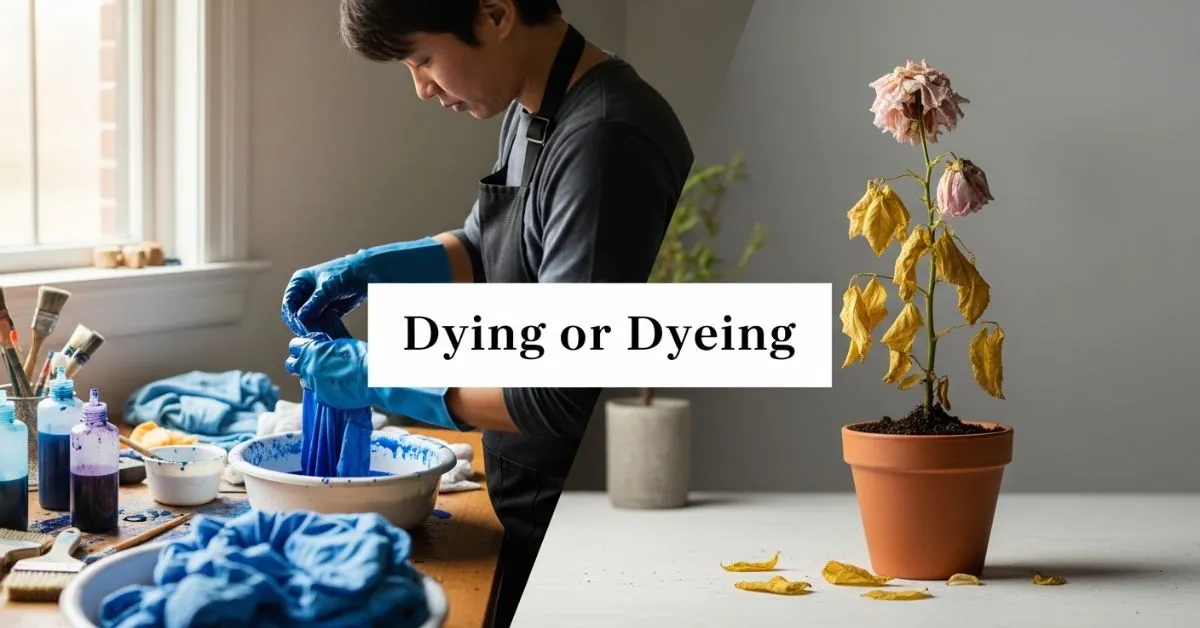
Dying → ✅ Means to stop living
Dyeing → ✅ Means coloring something (like hair or clothes)
Examples:
✅ “The plant is dying.”
✅ “She is dyeing her hair.”
❌ “She is dying her hair.”
👉 Simple Rule:
Dying = death
Dyeing = color
📜 The Origin of Dying or Dyeing
Both words come from different roots:
- Dying comes from Old English dēogan, meaning “to die.”
- Dyeing comes from Old English deag, meaning “color or stain.”
Over time, both words kept their meanings. But because “dye” adds -ing, it becomes dyeing (with an extra “e”), which makes it look very similar to “dying.”
👉 That extra “e” is what creates confusion.
🌍 British English vs American English Spelling
Good news: there is no difference between US and UK usage.
| Word | US Spelling | UK Spelling | Meaning |
| Dying | dying | dying | Losing life |
| Dyeing | dyeing | dyeing | Coloring |
👉 Key Rule:
This is about meaning, not region.
🤔 Which Spelling Should You Use?
Choose based on meaning:
- Use dying → when talking about life ending
- Use dyeing → when talking about coloring
Audience Tip:
- 🇺🇸 US → same rule
- 🇬🇧 UK → same rule
- 🌍 Global → same rule
👉 Always ask: Is this about death or color?
❌ Common Mistakes with Dying or Dyeing
- Using “dying” for coloring
❌ “She is dying her hair.”
✅ “She is dyeing her hair.” - Using “dyeing” for death
❌ “The plant is dyeing.”
✅ “The plant is dying.” - Ignoring the extra “e”
👉 Remember: dye → dyeing - Relying on sound
They sound similar always check meaning.
✍️ Dying or Dyeing in Everyday Examples
Emails:
“I am dyeing the fabric blue.”
Workplace:
“The company is not dying, it’s growing.”
Social Media:
“I’m dyeing my hair today 💇♀️”
News:
“The forest is slowly dying due to drought.”
Formal Writing:
“The process of dyeing textiles requires skill.”
📊 Dying or Dyeing – Google Trends & Usage Data
Search patterns show:
- Dying → Very high usage (common word)
- Dyeing → Lower usage (specific context)
| Keyword | Popularity | Usage |
| dying | Very High | General language |
| dyeing | Medium | Hair, fabric, art |
👉 SEO Tip:
“Dying” gets more searches, but “dyeing” is important in niche topics.
📌 Comparison Table – Dying vs Dyeing
| Feature | Dying | Dyeing |
| Meaning | Death | Coloring |
| Usage | General | Specific |
| Verb Base | Die | Dye |
| Example | “He is dying.” | “She is dyeing fabric.” |
| Confusion Level | High | High |
FAQs❓
1. Is dying or dyeing correct?
Both are correct but have different meanings.
2. What does “dying” mean?
It means losing life or stopping living.
3. What does “dyeing” mean?
It means coloring hair, fabric, or other materials.
4. Why is “dyeing” spelled with an extra “e”?
To keep the base word “dye” clear when adding “-ing.”
5. Is this a US vs UK difference?
No. Both are used the same way worldwide.
6. How can I remember the difference?
Dyeing has an “e” → think “extra color.”
7. Can I use dying for hair color?
No. Always use “dyeing” for coloring.
Conclusion
Understanding the difference between dying or dyeing is simple once you focus on meaning. “Dying” is used when talking about life ending, while “dyeing” is used when coloring something like hair or fabric. That one small letter “e” makes a big difference.
The confusion happens because both words look almost the same and sound very similar. Many people rely on pronunciation instead of meaning, which leads to mistakes. But now you know the key rule, it becomes easy to choose the right word.
The best way to avoid errors is to pause and check the context. If it’s about death, use “dying.” If it’s about color, use “dyeing.” This simple habit can improve your writing instantly.
This rule works everywhere, If you are writing for American, British, or global audiences. Once you understand it, you’ll never mix up these two words again.
Discover More Articles:
- Savior or Saviour : Quick Guide for US English📖(2026)
- Labour or Labor : Quick Guide for American English Writers(2026)
- Your or You’re : Simple Grammar Guide(2026)

“I’m Bill Bryson, a grammar expert at Grammeriffy.com. I share clear tips and guidance to help readers master English confidently.”